BlinkThorLabs
What Adaptive Cruise Control Actually Feels Like to Tune
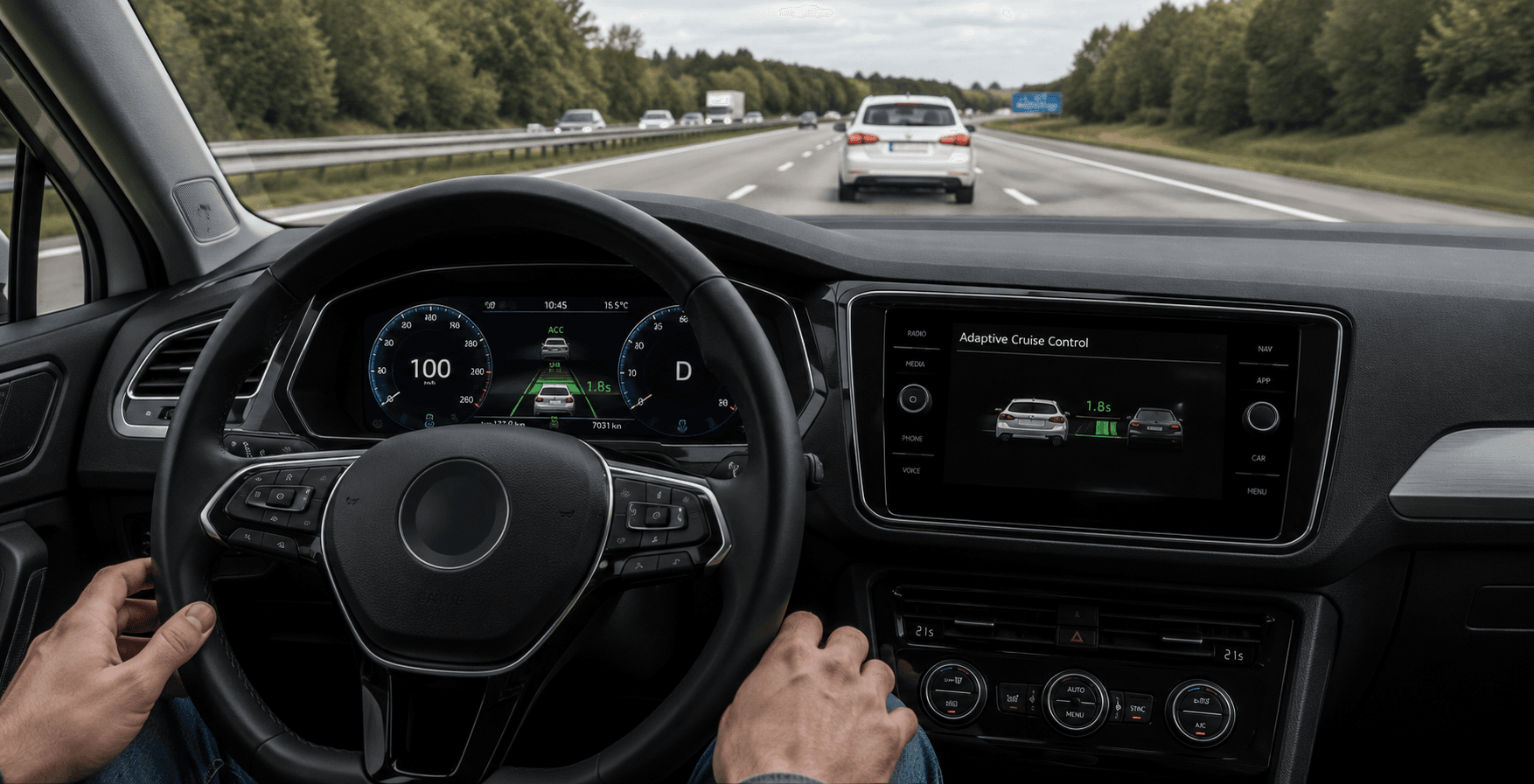
Process noise tuning matters more than your motion model — and jerk matters more than either, if you're the one sitting in the passenger seat.
Every ACC calibration document I've ever written has a table of jerk limits, comfort acceleration bounds, and following-distance settings, expressed in tidy numbers — meters per second cubed, meters per second squared, a distance in seconds of headway. None of those numbers, on their own, tell you what a specific setting actually feels like from the passenger seat at 6pm after your fourth tuning drive of the day. This is the part of the job the spec sheet doesn't capture, and it's most of what actually determines whether a calibration ships or gets sent back for another pass.
The First Thing You Feel Is the Jerk You Didn't Expect
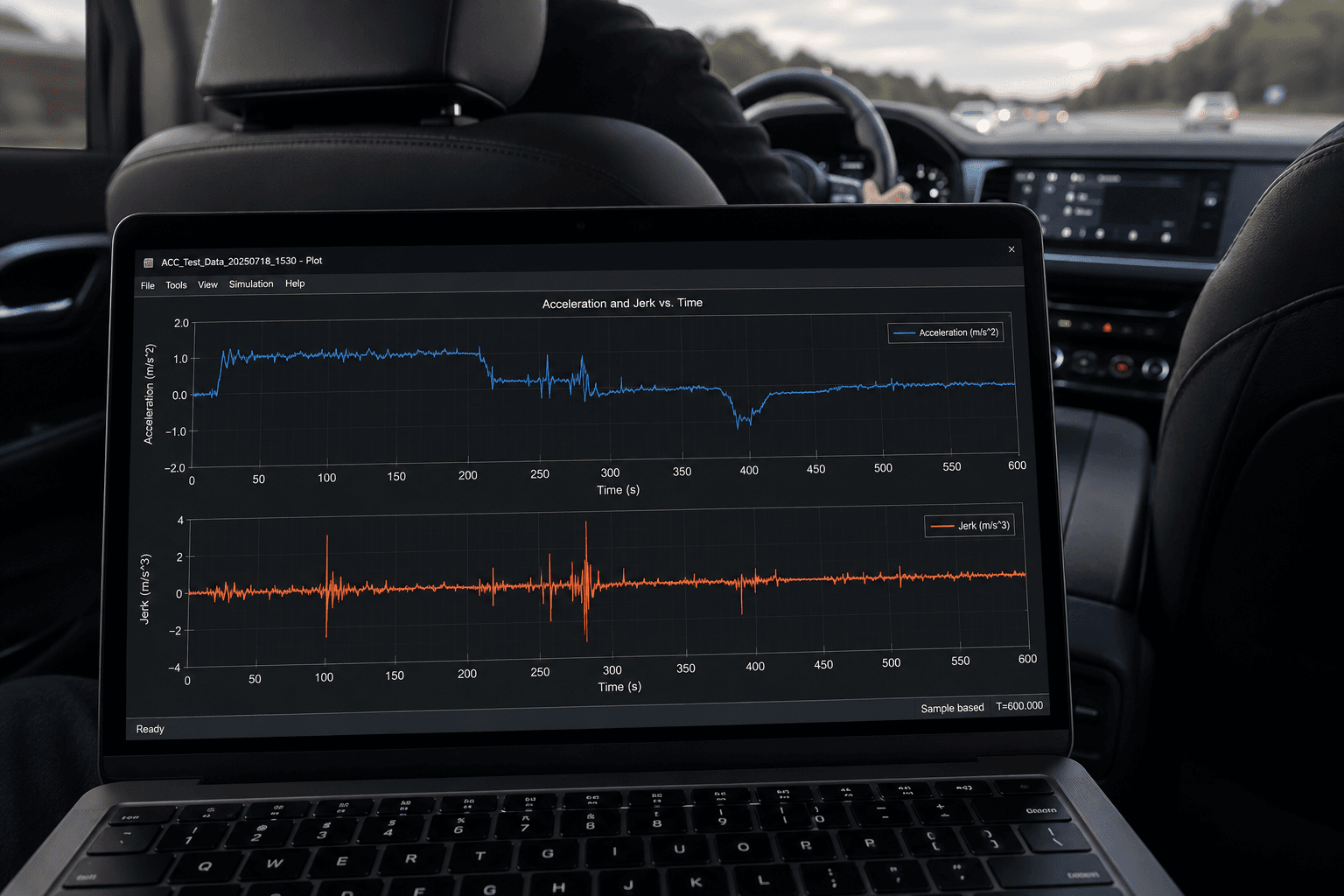
Jerk — the rate of change of acceleration, not the colloquial insult — is the parameter that separates "smooth" from "why did the car just do that" more than any other single number in the system. A deceleration profile that looks perfectly reasonable on a graph, decelerating from cruise speed down to match a slower lead vehicle over a sensible few seconds, can still feel abrupt if the onset of that deceleration is too sharp — your body registers the rate of change, not just the final magnitude, and a jerk limit set even slightly too loose produces a distinct, uncomfortable "snap" at the very start of a braking event that a purely acceleration-based spec would completely miss.
I remember the first calibration pass I sat through where this actually clicked for me, rather than being something I just knew from a textbook. The acceleration profile was, numerically, well within our comfort bounds — nothing in the peak deceleration number should have felt wrong. But the jerk at the very onset of the braking event was near our upper limit, and every single time the system engaged behind a slowing lead car, there was this small, involuntary flinch from whoever was in the passenger seat — not because the braking itself was hard, but because the start of it arrived faster than a human driver's own natural braking onset ever would. We tightened the jerk limit on deceleration onset specifically, left the rest of the profile alone, and the flinching just stopped. Same peak deceleration, same total stopping distance, completely different felt experience.
Following Distance Isn't One Feeling — It's Several, Layered
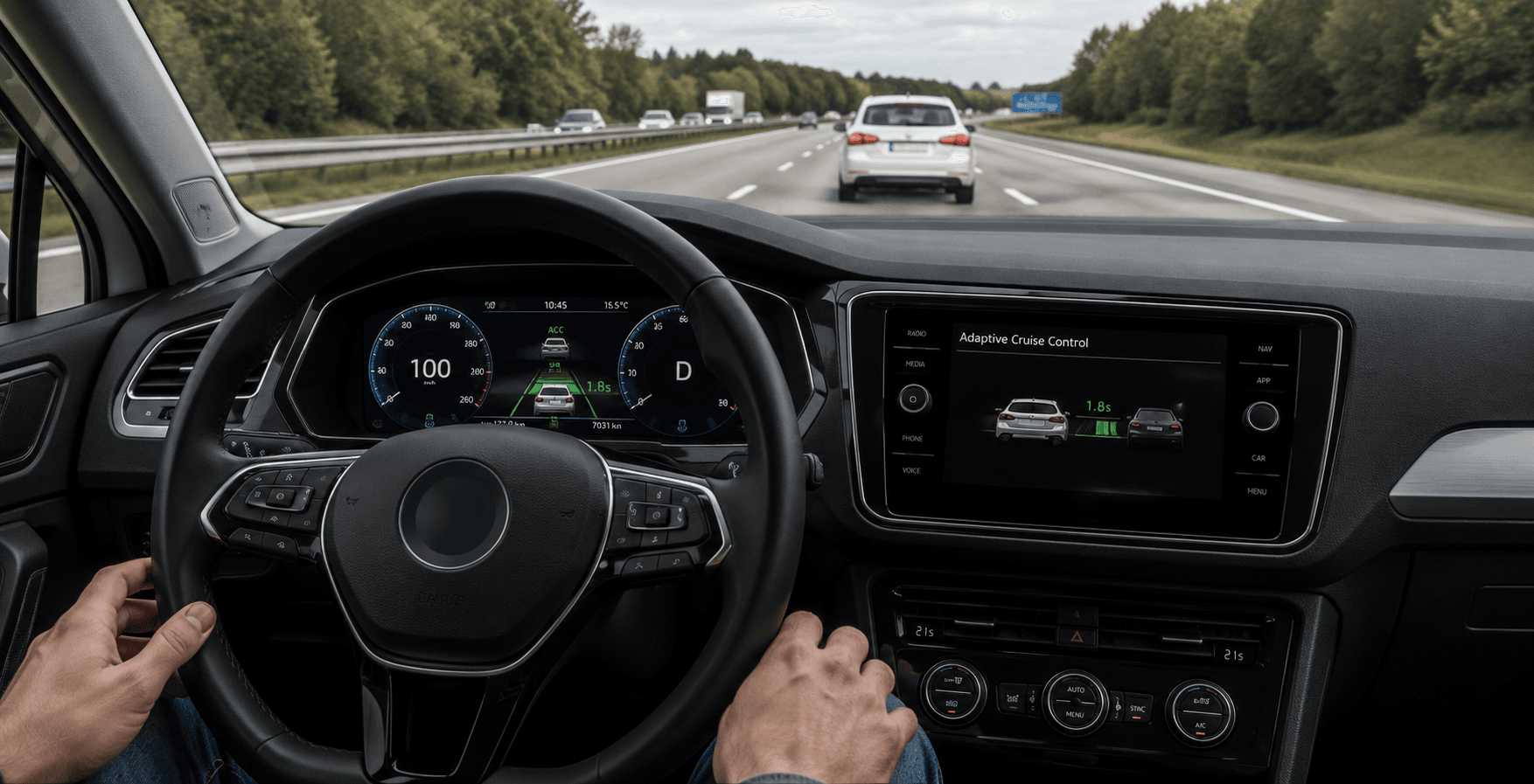
Tuning the different following-distance settings (typically offered to drivers as something like "close, medium, far") sounds like it should just be "pick three sensible headway times and you're done." In practice, each setting has its own distinct felt character that doesn't scale linearly with the number.
The "far" setting feels, correctly, cautious and relaxed — plenty of visible gap, gentle speed adjustments, nothing urgent about how the car responds to a slowing lead vehicle. This one is easy to get right because there's enough time margin in every scenario for the system to be gentle about it.
The "close" setting is where the real tuning tension lives. Too conservative, and drivers who explicitly chose "close" because they want the car to behave assertively feel like the system isn't actually respecting their preference — a "close" setting that still leaves a cautious-feeling gap reads as the system not listening to you. Too aggressive, and the reduced time margin means the system has meaningfully less room to decelerate smoothly when the lead vehicle brakes — the same comfort acceleration and jerk limits that felt fine at "far" following distance can feel abrupt at "close," purely because there's less time and distance available to spread the same deceleration event over. We ended up needing distinct comfort profiles per following-distance setting, not one profile with a single headway parameter varied — a lesson that took an embarrassing number of tuning drives to fully absorb, because it's not obvious from the spec that "close" following distance and "aggressive" comfort profile are actually coupled in how they need to be tuned together.
The Moment Something Is Technically Correct and Still Wrong
There's a specific, recurring type of frustration in this work: the system does exactly what its spec says it should do, and it still feels wrong, and there's no code bug to point to — just a gap between what the numbers say and what a human body actually experiences.
The clearest example I can point to: a scenario where a lead vehicle changes lanes and exits our path, and the ACC system, correctly and by design, begins accelerating back toward the set cruise speed once the lead vehicle is confirmed clear. Technically, everything about this is right — the object is gone, the path is clear, accelerating back to set speed is exactly the intended behavior. But if that re-acceleration begins even slightly too early, before a human passenger has visually and mentally processed that the lane change has actually happened and the path is genuinely clear, it produces a distinctly unsettling feeling — the car appears to be speeding up "before it should," even though by every technical measure it's behaving exactly correctly. The fix here wasn't a technical correctness fix at all — it was adding a small, deliberate delay before re-acceleration begins, specifically calibrated not against any safety requirement but against how long it takes a human passenger to feel confident the lane change has resolved. That delay is, by a strict engineering read, "unnecessary" — the system could safely accelerate sooner. It's there entirely for the human on the other side of the windshield.
Two Engineers, Two Guts, One Profile

Comfort profile tuning is, more than almost anything else in ADAS calibration, genuinely subjective in a way that resists pure data-driven resolution — and this becomes very obvious once you're tuning alongside a colleague with a meaningfully different driving temperament than your own.
I tend to prefer earlier, gentler braking onset — start decelerating a bit sooner, spread the speed change over more time, minimize any sense of urgency even in a moderate slow-down scenario. A colleague I've tuned with extensively prefers the opposite: hold speed longer, brake a bit later but still comfortably within limits, stay closer to the lead vehicle rather than opening a gap early. Neither of us is technically wrong — both profiles satisfy every jerk and acceleration bound in the spec — and both of us, honestly, find the other's preferred calibration mildly annoying to ride in, for reasons that are almost entirely about individual driving temperament rather than any measurable comfort metric.
What actually resolves this in practice isn't one of us convincing the other. It's broader, structured feedback across many different test drivers with different driving styles, looking for the profile that reads as comfortable to the widest range of people rather than optimizing for either of our individual preferences — which sometimes means the final shipped calibration doesn't feel like anyone's personal ideal, including the two of us who spent the most hours tuning it, and that's actually a reasonable sign the process worked rather than a disappointing compromise.
What This Job Actually Teaches You
The honest lesson from doing this for long enough: a comfort acceleration and jerk specification, however carefully derived, is a starting hypothesis, not a finished answer. The real tuning happens in the gap between "this satisfies every number in the spec" and "this feels like how a careful, unhurried human driver would actually do it" — and that gap only closes by spending real hours in the passenger seat, noticing the specific moment your own body registers something as wrong before your engineering brain can articulate exactly which parameter caused it.