BlinkThorLabs
Traffic Sign Recognition: From Pixel to Decision in Three Pipeline Stages
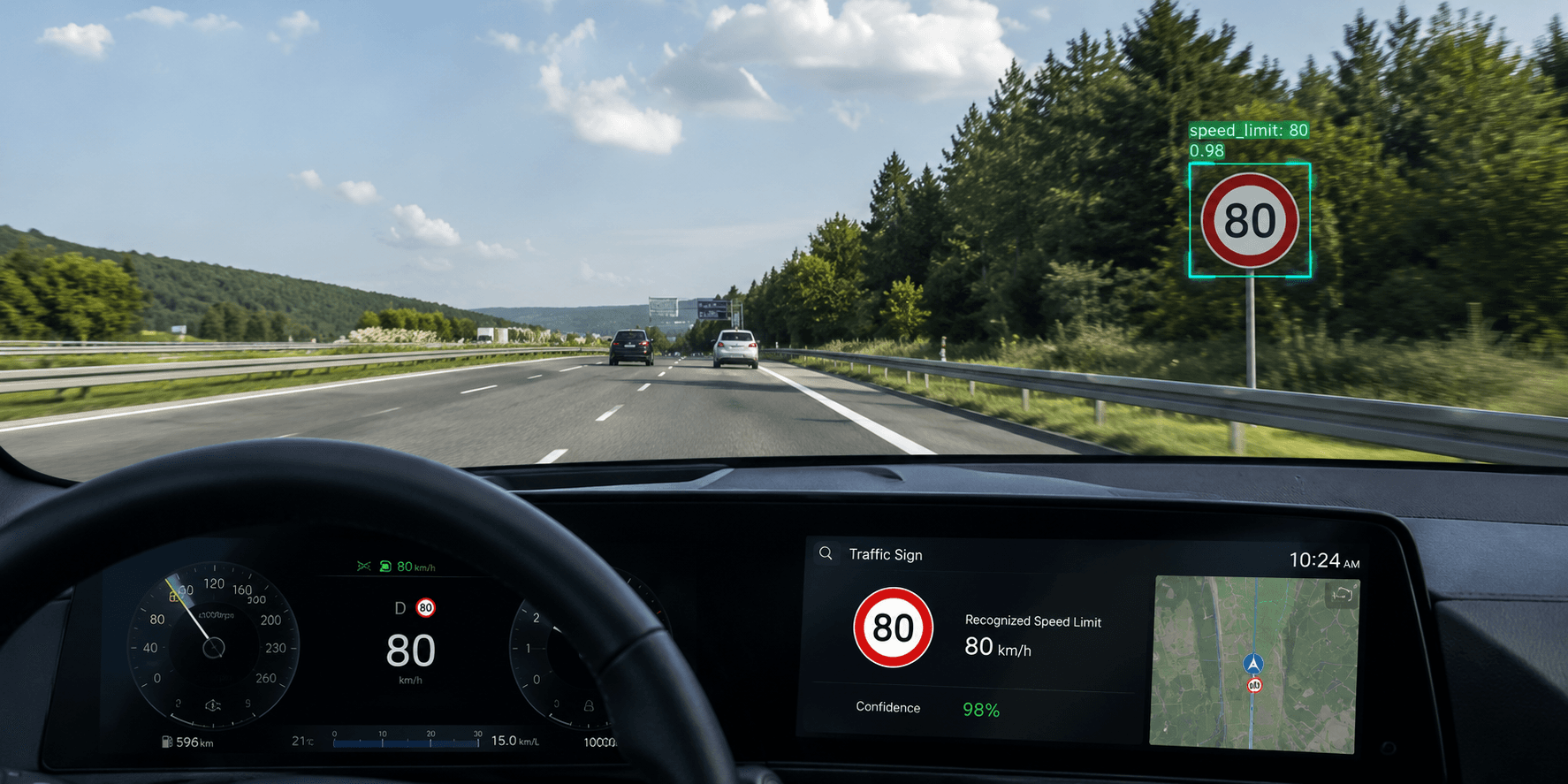
Detection finds it, classification names it, temporal fusion decides whether to trust it. Here's the full path.
A speed limit sign appearing correctly on your dashboard looks, from the driver's seat, like a single instantaneous recognition event. Under the hood, it's the output of three distinct pipeline stages, each with its own failure modes and its own reason for existing — and understanding where each stage's job actually ends and the next one's begins is the difference between debugging a TSR issue efficiently and chasing the wrong stage for a symptom that actually originated somewhere else entirely.
Stage 1: Detection — Finding the Sign in the Frame
The first stage's job is narrow and specific: given a raw camera frame, locate the bounding regions likely to contain a traffic sign, without yet caring what specific sign it is. This is a standard object detection task — architectures like YOLO variants are common here, trained to output candidate bounding boxes with an associated "this is probably a sign" confidence score, generally trained as a class-agnostic or coarse-category detector (sign vs. not-sign, sometimes with broad category splits like circular-prohibition vs. triangular-warning vs. rectangular-informational) rather than attempting fine-grained classification at this stage.
The core challenge here is scale. A speed limit sign that will eventually need to be read clearly enough to distinguish "30" from "50" might occupy only a handful of pixels in a wide-angle forward camera frame when first detected at typical highway or urban approach distances — well before the vehicle is close enough for the sign to occupy a comfortable, easily-classifiable pixel footprint. Detection models handle this partly through multi-scale feature extraction (detecting at several internal resolution levels so small, distant objects aren't lost entirely at a coarse feature scale) and partly through accepting that early, distant detections will carry lower confidence and lower effective resolution — which is precisely why detection alone never triggers a decision. It hands off a candidate region, at whatever confidence and resolution it can currently achieve, to the next stage.
A detection-stage miss (failing to box a sign at all) and a detection-stage low-confidence hit are different failure profiles worth distinguishing during debugging — a miss means the pipeline never gets a chance to classify anything for that sign at that frame, while a low-confidence hit still proceeds forward but carries uncertainty that the later stages need to account for rather than treat as a clean, confident input.
Stage 2: Classification — Naming the Specific Sign
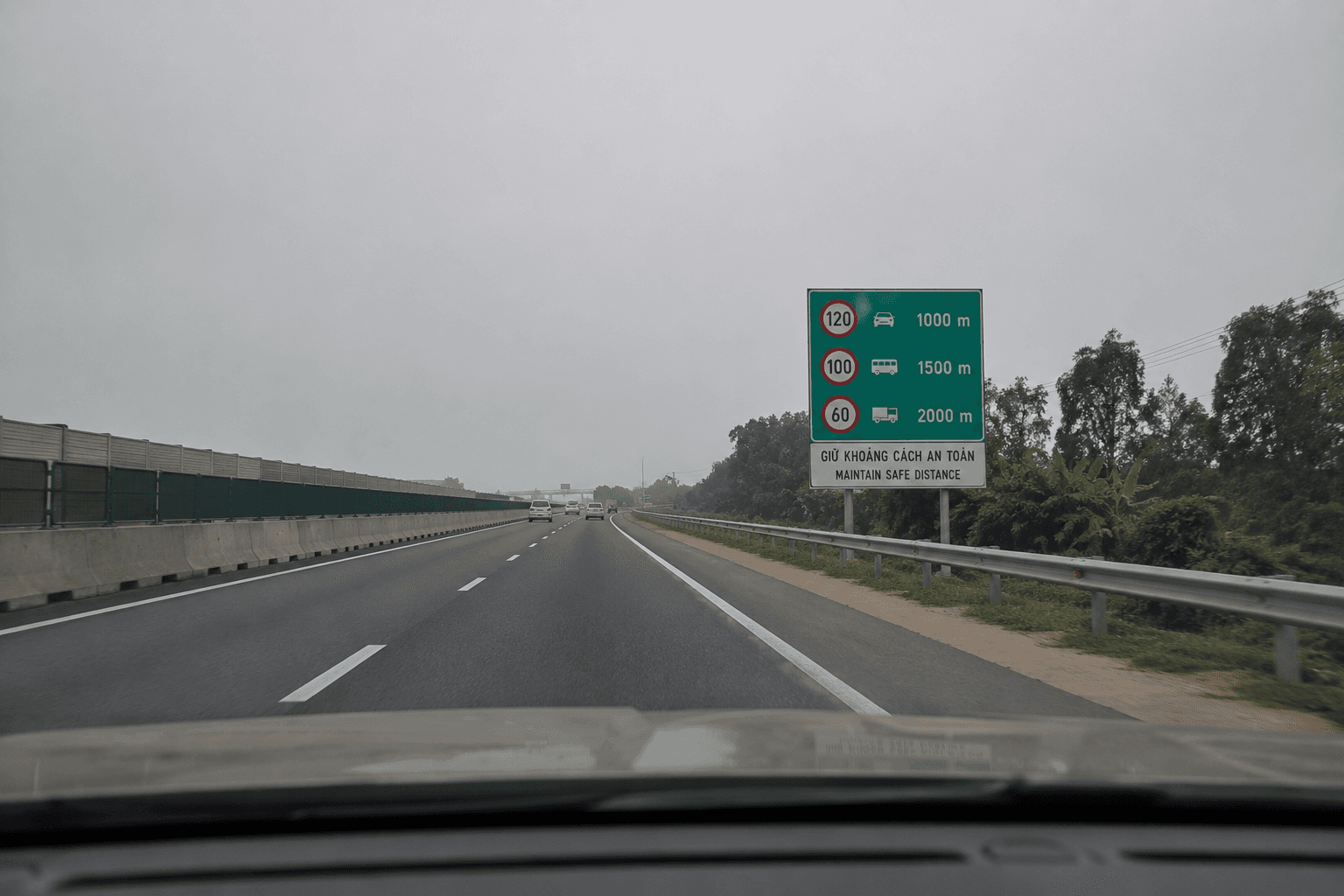
Once a candidate region is detected, classification takes that cropped image patch and assigns it a specific, fine-grained label — not just "speed limit sign" but "speed limit 50," not just "prohibition sign" but the exact prohibition it represents. This stage typically runs a dedicated classification network (often lighter-weight than the detection stage, since it operates on an already-cropped, already-localized region rather than a full frame) trained specifically to discriminate between the fine-grained sign categories relevant to the operating region's actual sign set.
The core challenge here is visual similarity between distinct, meaningfully different signs. A "50" and an "80" digit pair can look surprisingly close at low resolution or under motion blur, particularly with certain regional font/digit styles — a misclassification here isn't a minor cosmetic error, it's the direct difference between the system correctly informing the driver of an 80 km/h limit versus an incorrect and consequential 50 km/h reading. Beyond digit confusion, visually similar sign families (different prohibition types sharing a similar red-circle silhouette, distinguished mainly by a small interior icon) present a genuinely harder discrimination problem than detection alone was ever meant to solve, which is exactly why this stage exists as a dedicated step rather than being folded into detection's coarse output.
Classification confidence at this stage is a critical output, not just the winning label — a classification stage that returns "50, with 62% confidence" versus "50, with 97% confidence" is providing meaningfully different information to whatever comes next, and a well-designed pipeline treats that confidence value as a first-class signal rather than discarding it once a label is chosen.
Stage 3: Temporal Fusion — Deciding Whether to Actually Trust It
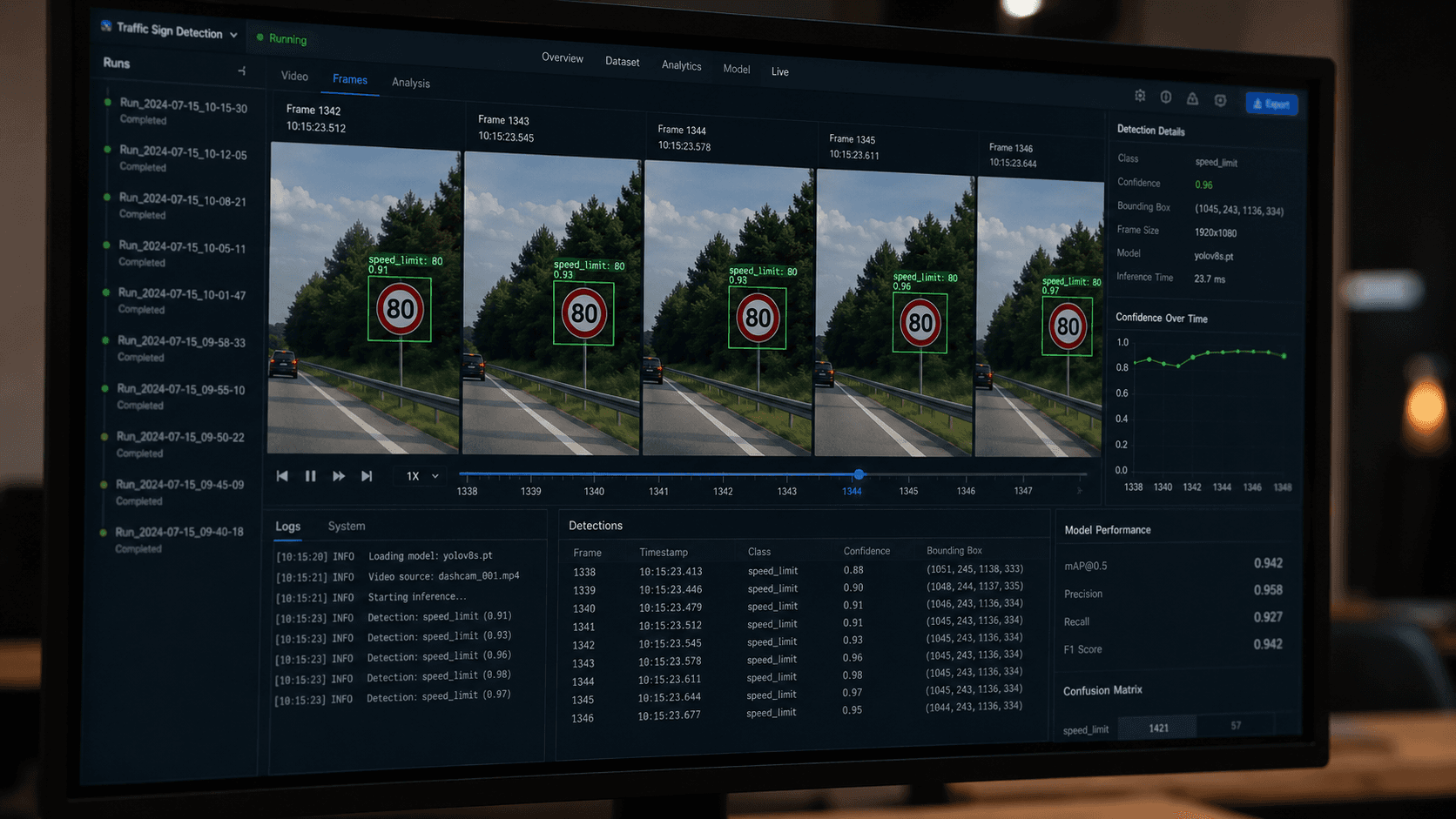
This is the stage that turns "the model thinks it saw a 50 sign in this one frame" into "the system will now display/apply a 50 km/h limit" — and the gap between those two things is exactly why temporal fusion exists as its own distinct pipeline stage rather than acting on any single frame's classification output directly.
A vehicle approaching a sign captures many consecutive frames of that same physical sign as it gets closer — each frame independently run through detection and classification, each producing its own (correlated, but not identical) confidence and label output. Temporal fusion accumulates evidence across this sequence of frames rather than committing to the very first classification the moment it clears some threshold. A practical implementation might require a specific label to be the majority result across a rolling window of N consecutive frames, or use a confidence-weighted accumulation scheme where sustained moderate confidence across many frames can outweigh a single very-high-confidence-but-isolated reading, or explicitly require confidence to be increasing as the vehicle closes distance on the sign (consistent with the sign becoming genuinely easier to read, rather than a spurious single-frame classification spike that isn't corroborated as more, higher-resolution frames become available).
This stage exists specifically to prevent exactly the failure mode that would otherwise be inevitable: a single unlucky frame — motion blur, a momentary lighting glare, a brief partial occlusion by a passing object — producing one incorrect high-confidence classification that, without temporal fusion, would directly and immediately change the vehicle's displayed or applied speed limit based on one bad frame among what might be twenty or thirty consecutive observations of the same real sign. Requiring accumulated, consistent evidence across a meaningful window before committing a decision is what makes the difference between a system that's occasionally wrong for one frame internally (harmless, since it never surfaces to the driver or downstream ADAS behavior) and a system that's occasionally wrong in a way that actually changes vehicle behavior.
The Additional Cross-Check: Map and GPS Data
Beyond the three core vision-pipeline stages, many production TSR implementations add a further layer of validation using map and GPS data as an independent, non-visual corroborating signal — comparing the vision pipeline's current classification against a known or previously-logged speed limit for the vehicle's current GPS position, where such map data exists and is reasonably current.
This isn't a replacement for the vision pipeline's own temporal fusion confidence — map data can be stale (a speed limit changed since the map was last updated) and GPS position has its own uncertainty, particularly in urban canyon environments — but it functions as a genuinely useful independent cross-check specifically for the cases where the vision pipeline's confidence is borderline. A vision-pipeline classification that temporal fusion has accumulated to a moderate-but-not-overwhelming confidence level, and that agrees with map data for the current position, can be trusted with somewhat more confidence than the vision signal would justify entirely on its own — while a vision classification that strongly disagrees with map data for the current location is a legitimate signal to either hold off on committing the change or flag it for lower-confidence display treatment, since agreement between two largely independent sources of evidence (camera-based visual recognition and stored map data) is a meaningfully stronger signal than either alone.
Why the Stage Boundaries Matter for Debugging
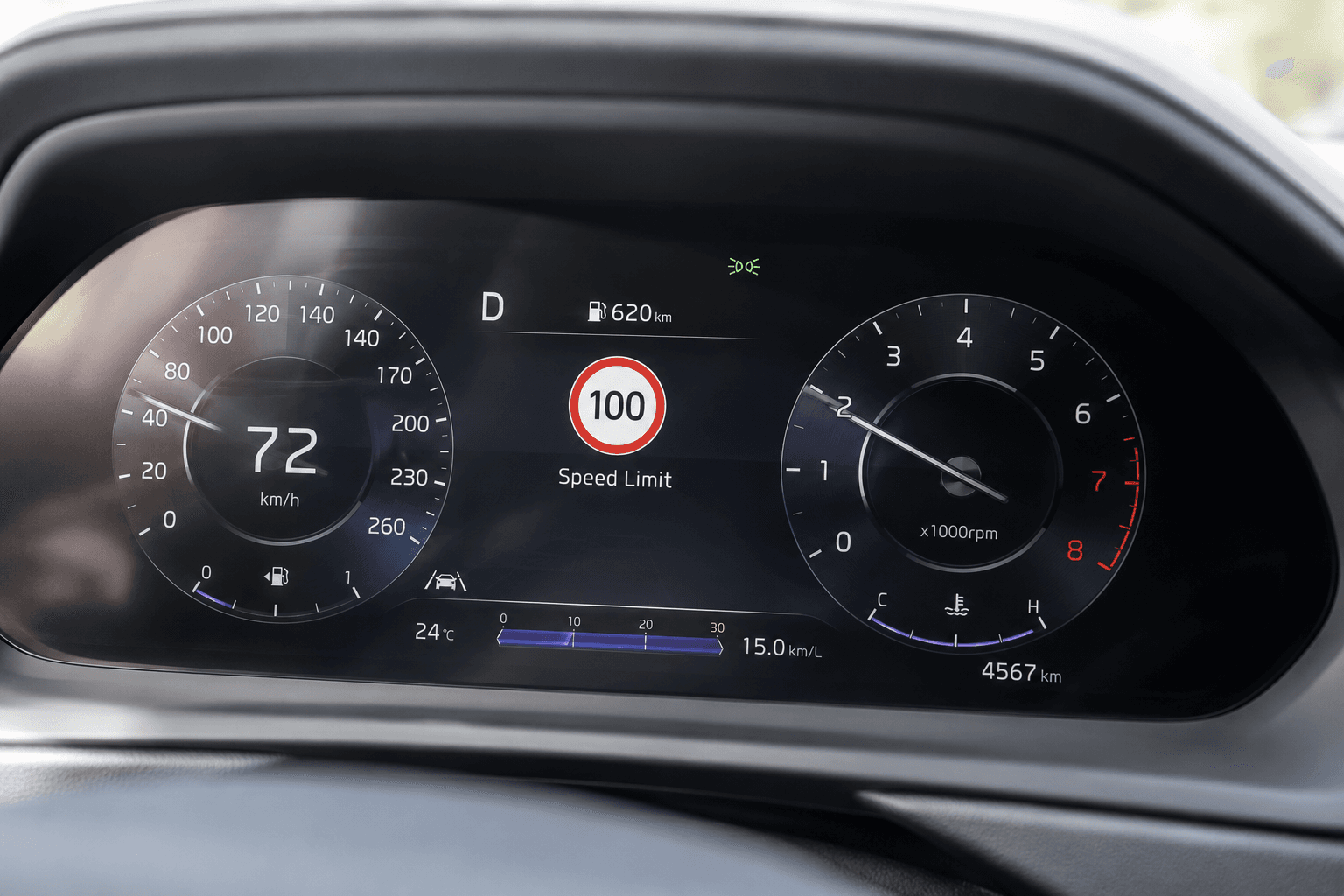
The practical reason to keep these three (or four, counting the map cross-check) stages conceptually distinct rather than thinking of TSR as one monolithic "sign recognition" black box: a reported field issue — "the car showed the wrong speed limit" — could originate at any one of these stages, and they call for completely different fixes. A sign that was never boxed at all points to detection-stage scale or lighting robustness. A sign that was boxed correctly but labeled wrong points to classification-stage confusion between visually similar categories. A correct classification that got applied too early, based on too little accumulated evidence, points to temporal fusion window or threshold tuning. Treating all three as one undifferentiated "the AI got it wrong" diagnosis wastes debugging effort on the wrong stage far more often than it needs to, once you actually know which of the three jobs the failure belongs to.