BlinkThorLabs
Lane Keeping Assist: The Fight Between the System and the Driver's Hands
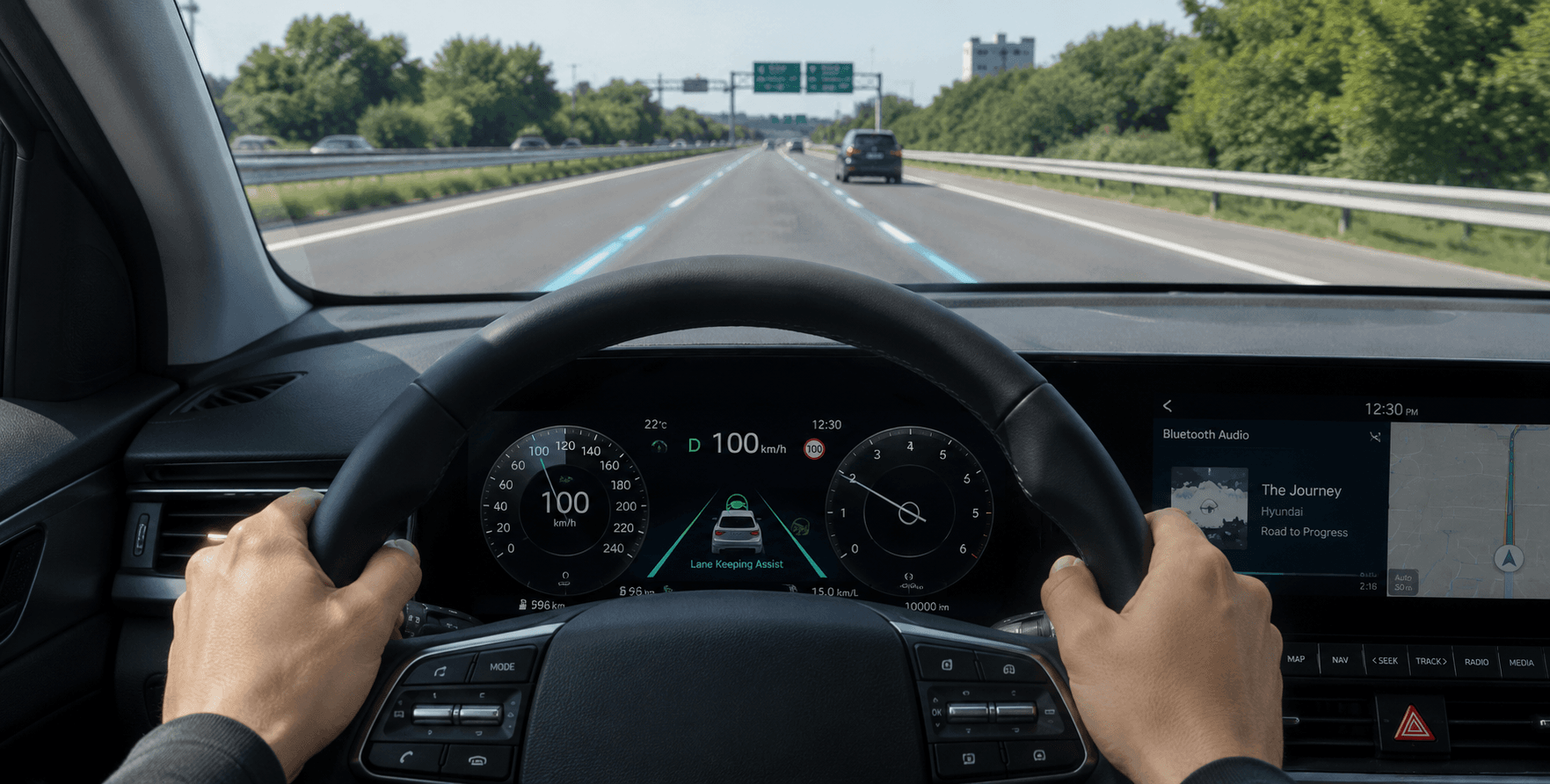
A conversation that actually happened, more or less, over a whiteboard and two cold coffees.
Priya (control systems, leans hard toward conservative/safety): Okay, so the torque override threshold. Current cal has it at 3.5 Newton-meters sustained for 200 milliseconds before the system disengages steering assist. I think that's too low.
Marcus (also control systems, leans toward driver experience): Too low meaning what — you want it harder to override, or easier?
Priya: Harder. If a driver applies 3.5 Nm for a fifth of a second, that could just be them adjusting posture, reaching for something, a bump in the road transmitting through the wheel. We're letting the system give up lane-keeping authority on what might not even be an intentional steering input.
Marcus: Right, but flip it around — if someone actually wants to change lanes, or swerve around something in the road, and the system is fighting them for even a moment because our threshold assumes they might just be adjusting posture, that's the system actively working against the driver's clear intent. That's not a subtle problem. That's the exact thing that makes people hate driver assistance features and turn them off entirely.
Priya: Sure, but "the driver might turn it off" is a UX cost. A system that disengages too easily and lets a genuine lane departure happen because it misread a small torque blip as intent — that's a safety cost. Those aren't symmetric.
Marcus: I don't think they're as asymmetric as you're framing it, though. Let's back up — what's LDW actually there for, versus LKA? Because I think we're conflating two different jobs.
Priya: Fair. Lane Departure Warning is passive — it just tells the driver "hey, you're drifting," visual or haptic alert, no steering input at all. LKA is active — it actually applies corrective torque to nudge the vehicle back toward lane center. LKA is doing something LDW never does: physically fighting the driver's own hands on the wheel, even if just a little.
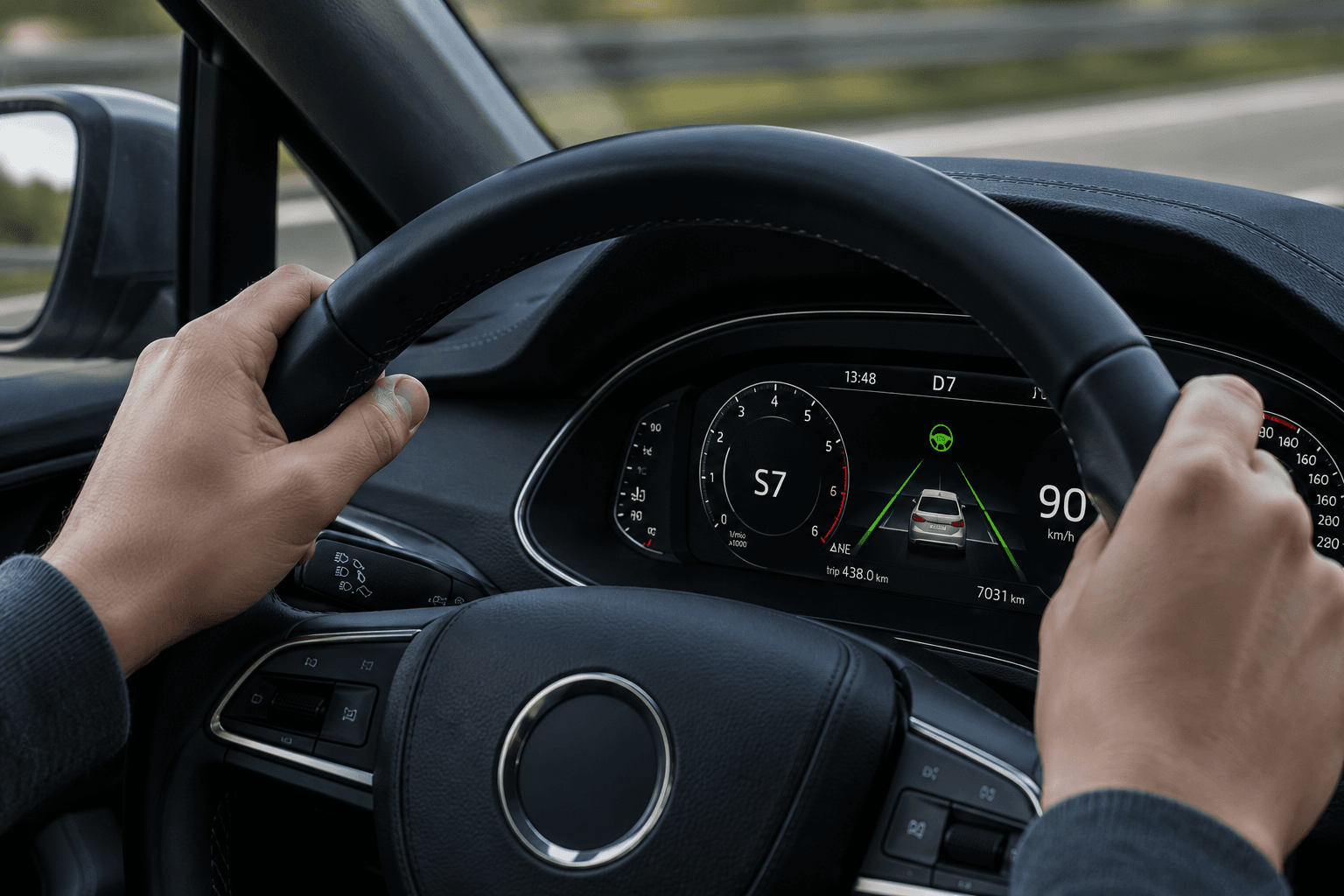
Marcus: Right, and that's exactly my point. Because LKA is actively applying torque, the override threshold isn't really about "did the driver intend to leave the lane." It's about "is the driver currently exerting more control input than the system is." At some point, however we define our threshold, we are choosing to let the car win a torque contest against a driver who is actively steering. That should make us nervous in the other direction, not just yours.
Priya: Okay, that's actually a good reframe. So walk me through where you'd set it.
Marcus: Lower than 3.5 Nm, and probably a shorter sustained duration too — closer to 100 milliseconds. Here's why: a real intentional steering input, someone actually trying to change lanes or avoid something, applies torque that ramps up quickly and keeps climbing if the system resists it. A posture adjustment or an incidental bump transmits as a brief, low-magnitude blip that doesn't sustain and doesn't escalate. If our threshold requires 200ms of sustained torque, we might be adding real delay to genuine intentional overrides — someone trying to avoid an obstacle doesn't have 200ms of patience to spare in that scenario.
Priya: That's the part that actually worries me about going lower, though — not the normal case, the edge case. What about a driver who's drowsy, or genuinely losing attention, and their hands apply some intermittent, disorganized pressure on the wheel that isn't really "intent" in any meaningful sense, but happens to cross a lower, shorter threshold? That's exactly the scenario where we'd want the system to hold lane-keeping authority the longest, not release it fastest.
Marcus: That's fair, and I don't have a clean answer for that one. I think that's actually a case where torque threshold alone isn't the right tool — that's more a driver monitoring problem than a steering torque problem. We shouldn't try to make the torque threshold do double duty as a drowsiness detector by making it artificially stiff for everyone, when the actual failure mode you're worried about needs its own separate detection layer.
Priya: ...Okay, I actually agree with that. If we're using torque threshold as a proxy for "is the driver impaired," we're going to get both problems — too stiff for alert drivers making a real, deliberate maneuver, and still not reliably catching genuinely impaired input patterns, because impaired steering doesn't look like one consistent signature we can threshold against cleanly.
Marcus: Right. So separate concerns. Torque threshold's job: distinguish "brief incidental input" from "sustained deliberate steering effort," as fast and cleanly as we reasonably can, so LKA doesn't fight a driver who's clearly, intentionally taking control. Drowsiness/impairment detection: a genuinely separate system, using genuinely different signals — eye tracking, steering pattern irregularity over a longer time window, whatever we've got — and that system, if it fires, can independently decide to hold or escalate warnings regardless of what the torque threshold alone would say in the moment.
Priya: Fine. So where do we actually land on the number?
Marcus: I'd propose splitting the difference on magnitude but keeping the "escalating vs. static" distinction as the real signal, not just a static threshold. Something like: 2.5 Nm as a base threshold, but the actual override decision weights whether torque is climbing over a short window (suggesting real, escalating driver effort) versus flat or oscillating (suggesting incidental contact). That gets us a faster, more responsive override for genuine intentional steering, without dropping our guard on a low, static hand-on-wheel signal that isn't actually indicating deliberate control.
Priya: That's — actually, yeah, I like that better than either of our original positions. It's not really "lower the threshold" or "raise the threshold," it's "stop treating this as a single static number and look at the shape of the input." I'll take that to the validation team and see how it holds up against our override test matrix.
Marcus: Bring coffee. Last time we changed a threshold number the test matrix took two days.

The Point of Writing This Down
The useful thing about this disagreement — and it's a real one, not a rhetorical device — is that both starting positions were defensible, and neither was actually complete on its own. A threshold set purely for safety-conservative caution risks making LKA feel like it's wrestling the driver during genuine, intentional maneuvers, which is exactly the kind of experience that gets a feature switched off entirely, at which point it provides zero safety value to that driver going forward. A threshold set purely for responsiveness risks under-weighting the specific case of low-effort, non-deliberate hand pressure that shouldn't count as an intentional override.
The resolution that actually held up wasn't a compromise on the number — it was recognizing that "torque threshold" was being asked to do a job (detecting driver impairment) it was never well-suited for, and separating that concern out let the actual torque-based override logic get simpler and more confident at the one job it's genuinely good at: telling the difference between a driver who's bumping the wheel and a driver who's actively steering somewhere on purpose.