BlinkThorLabs
Demo Day: Our ADAS Prototype's First Real Road Test
Live, present tense, as it happens. Months of bench and simulation come down to the next ninety seconds.
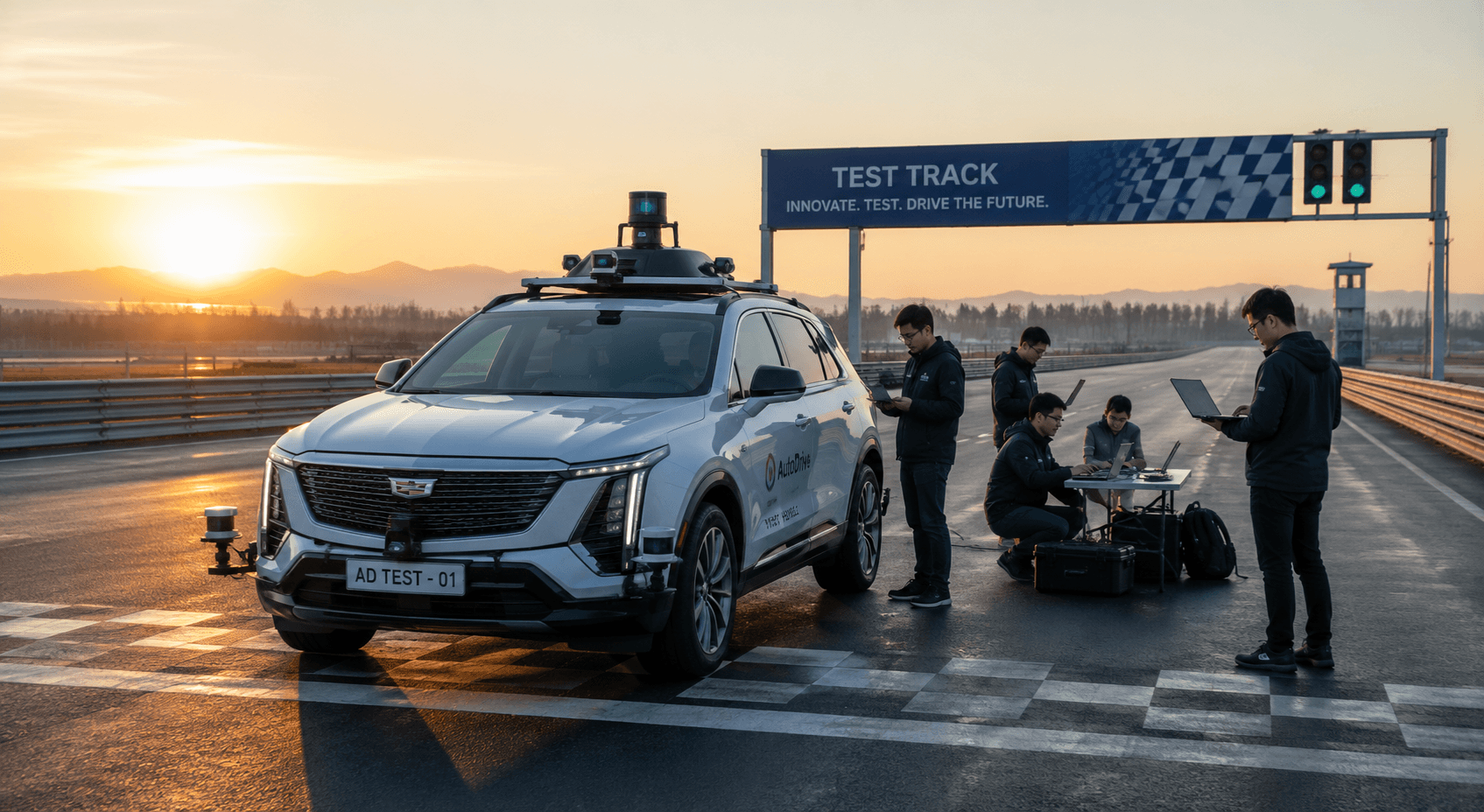
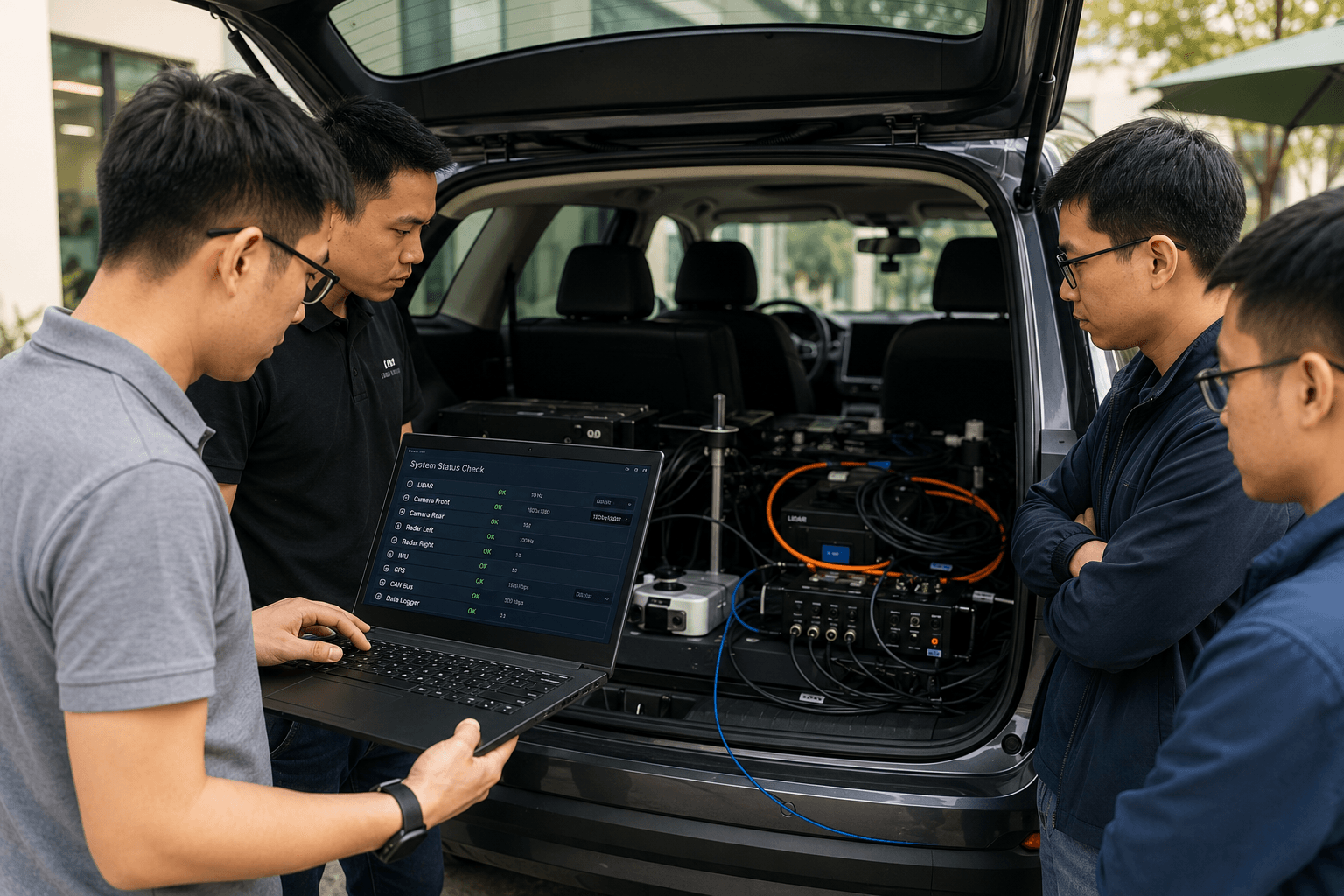
6:47 AM. The test track is nearly empty, mist still sitting low over the tarmac, and our test vehicle is parked at the starting line with its trunk open, cables running from the sensor rig into a laptop balanced on a folding table. Six months of bench testing and simulation runs come down to this morning, and everyone standing around this car knows it, even if nobody's saying it out loud.
6:52 AM. Final system checks. Someone's crouched by the rear bumper confirming the radar unit's mounting bolts one more time, not because anyone thinks they're loose, but because checking them is easier than standing still. The laptop screen shows a status dashboard — LIDAR: OK, Camera Front: OK, Radar: OK, CAN Bus: OK — four green indicators that represent an enormous amount of work and, right now, feel almost insultingly small on the screen for what they're carrying.
7:03 AM. We climb in. Driver in the seat, safety engineer in the passenger side with a hand hovering near the manual override, laptop engineer in the back with a direct view of the live telemetry feed. Nobody says "ready," exactly, but there's a nod, and the driver starts the engine.
7:06 AM. Rolling forward at low speed, still well under the system's minimum engagement threshold, just getting a feel for the car with everything live and logging. The dashboard in the back seat is scrolling — sensor timestamps, object detections, nothing engaged yet, just watching the system see the world for the first time outside a lab.
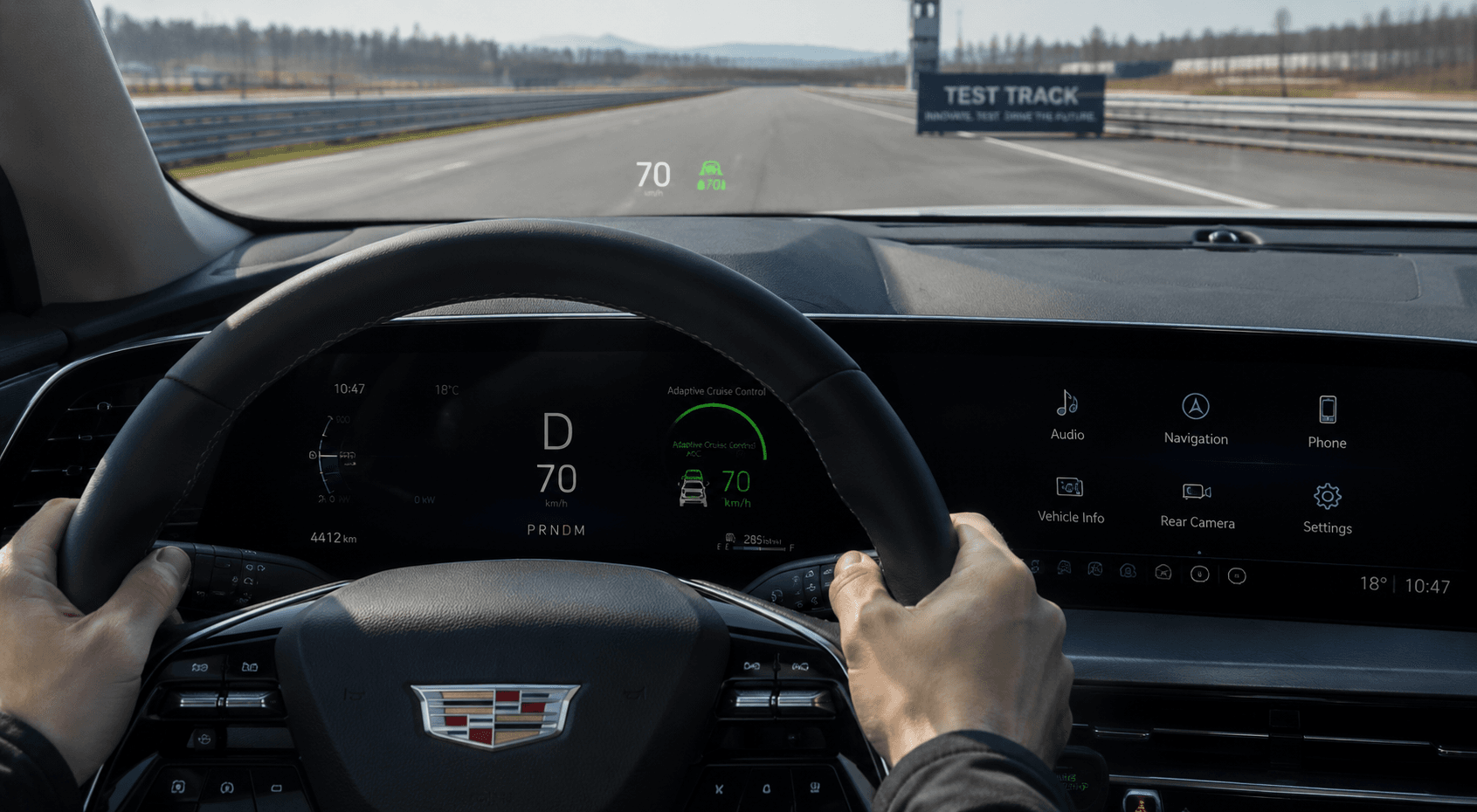
7:11 AM. Speed's up to the track's straightaway limit. The driver glances back, gets a thumbs up from the safety engineer, and reaches for the ACC engage button.
7:11:14 AM. Engaged. The dashboard icon flips from gray to green — Adaptive Cruise Control: ACTIVE — and for a second, nobody in the car breathes any differently than they did five seconds ago, because nothing dramatic happens. The car simply... continues. Holding speed, holding lane position, exactly like it's supposed to, exactly like it did a hundred times in CARLA and on the HIL rig, except this time the wind noise is real and the asphalt under the tires is real and there is no reset button.
7:13 AM. A lead vehicle — one of our own support cars — pulls into the lane ahead at a moderate distance, decelerating slightly to give the system something to actually track. The dashboard's object list updates: CAR, ID 4, range 41.2m, closing. The ACC system smoothly backs off throttle, settling into a following gap that matches what months of tuning said it should. Someone in the back seat exhales audibly. This part is working.
7:15 AM. Here's where it gets interesting, and not according to plan. A second support vehicle, positioned to simulate a cut-in scenario, pulls from the adjacent lane into our lane, ahead of the tracked lead vehicle, at a distance and closing speed we'd rehearsed and validated dozens of times in simulation.
7:15:03 AM. The system's reaction is slower than the dashboard's own logged simulation baseline. Not dangerously slow — the safety engineer's hand is already moving toward the override, purely out of trained reflex, not because intervention is actually needed yet — but the deceleration response that should begin within a specific window takes visibly, measurably longer to initiate than every simulation run had shown.
7:15:04 AM. "I've got it," the driver says, calm, already easing off the accelerator manually as a precaution, letting the system continue running and logging rather than disengaging it outright — the right call, because the moment isn't actually dangerous, it's informative, and disengaging now would throw away the exact data we need.
7:15:07 AM. The system does catch up — braking engages, gap re-establishes, the cut-in vehicle settles into the lane ahead at a safe following distance. From the outside, to anyone not staring at millisecond-level telemetry, this probably looked completely uneventful. From inside the car, it was three of the longest seconds of the morning.
7:16 AM. We ease to a stop on the shoulder, not because anything failed, but because everyone in the car wants to look at that specific window of data immediately, while it's fresh, rather than waiting for a full debrief later.
7:19 AM. Huddled around the laptop on the hood of the car, replaying the logged frames from the cut-in event frame by frame. The delay traces back to something specific and fixable: the object classification confidence for the cutting-in vehicle took longer than expected to cross the threshold our planning logic required before committing to a deceleration response — a threshold that had been tuned against simulated cut-in scenarios with slightly different visual characteristics (contrast, vehicle size in frame) than this particular real vehicle, at this particular angle, in this particular morning light, presented.
7:24 AM. This is the real value of the morning, and everyone standing around the laptop knows it even through the adrenaline — not that the system failed, but that it revealed a specific, addressable gap between our simulated training conditions and this one real morning's specific lighting and vehicle geometry. That's exactly the kind of gap no amount of additional bench testing would have surfaced on its own.
7:31 AM. Back in the car. Same test, same cut-in scenario, this time with the safety engineer manually noting confidence threshold values in real time as they cross, building the dataset we'll need to actually retune the classifier's threshold before the next session — turning this morning's surprise into next week's fix, right now, while the specific scenario is still fresh and repeatable on this exact stretch of track.
7:52 AM. Third run of the morning. The cut-in response is faster this time — not fixed yet, that'll take real analysis and retuning back at the lab, but the team's manual awareness of the exact triggering condition means the driver and safety engineer are reading the situation half a second earlier themselves, compensating in real time for a gap the software hasn't closed yet.
8:15 AM. We pull back into the staging area. Nobody's popping any metaphorical champagne — the honest summary of the morning is "the system mostly worked, and the one place it didn't quite work is now the most well-understood problem on the whole project," which is a genuinely good outcome for a first real road test, even though it doesn't feel like a triumphant one in the moment.
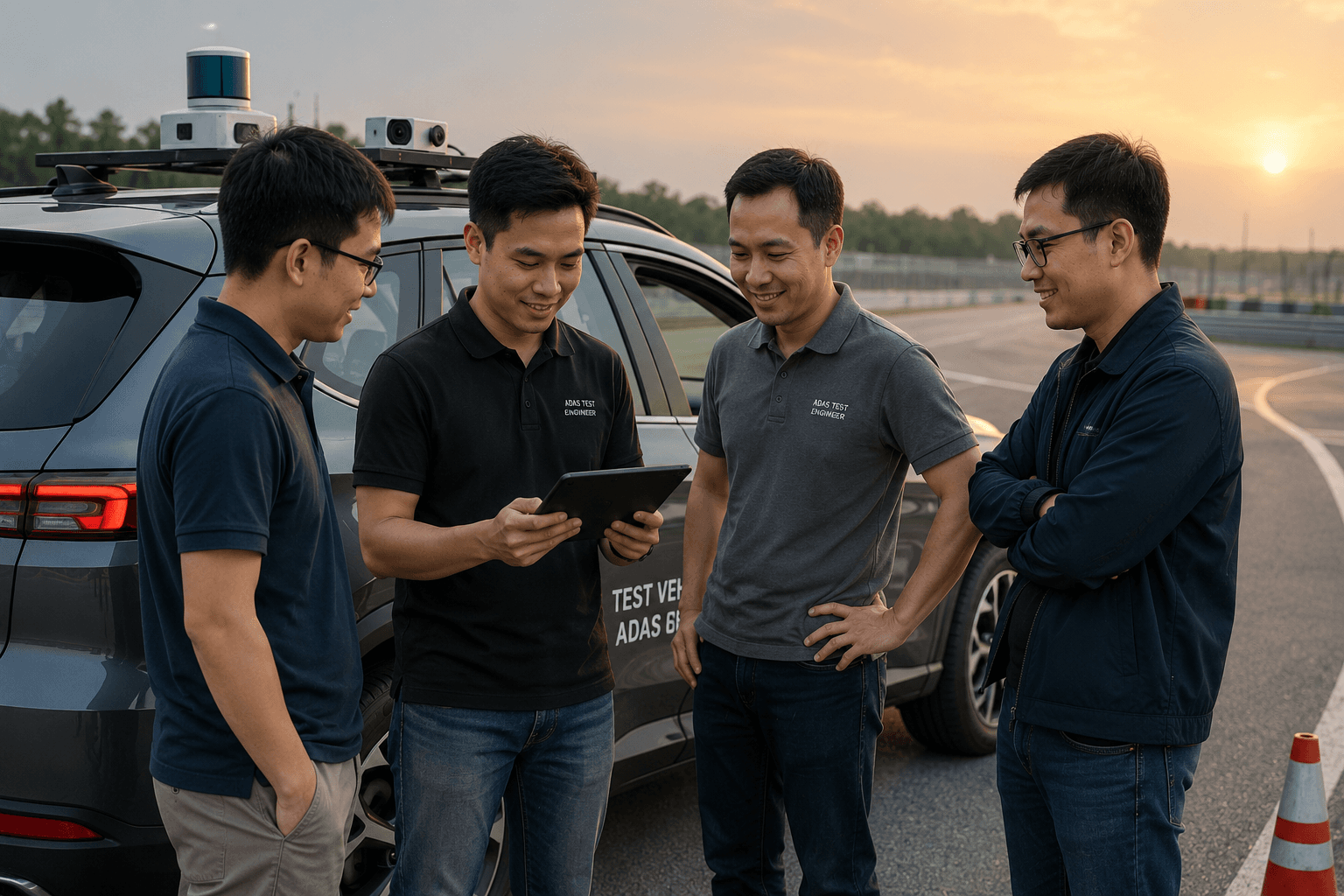
8:20 AM. Someone's already pulling the full log off the vehicle's data recorder onto a laptop, because the first thing everyone wants isn't breakfast — it's the complete telemetry from that 7:15 AM window, replayed slowly, so that by Monday morning the confidence threshold that cost us three tense seconds on a cold test track this morning becomes a documented, fixed, retested parameter instead of a story we tell about the first road test.
That's really the whole point of a first real road test. Not that everything works. That the one thing that doesn't becomes something you understand precisely enough to fix — and today, it did.