 BlinkThorLabs
Why Does This Robot Need Two Brains?
A genuine question I had before I understood the answer: the Pi already runs Linux and ROS2. Why bolt on a whole separate microcontroller too?
We didn't build the twin to look impressive in a demo. We built it because I was tired of guessing what the robot "felt" from the outside.

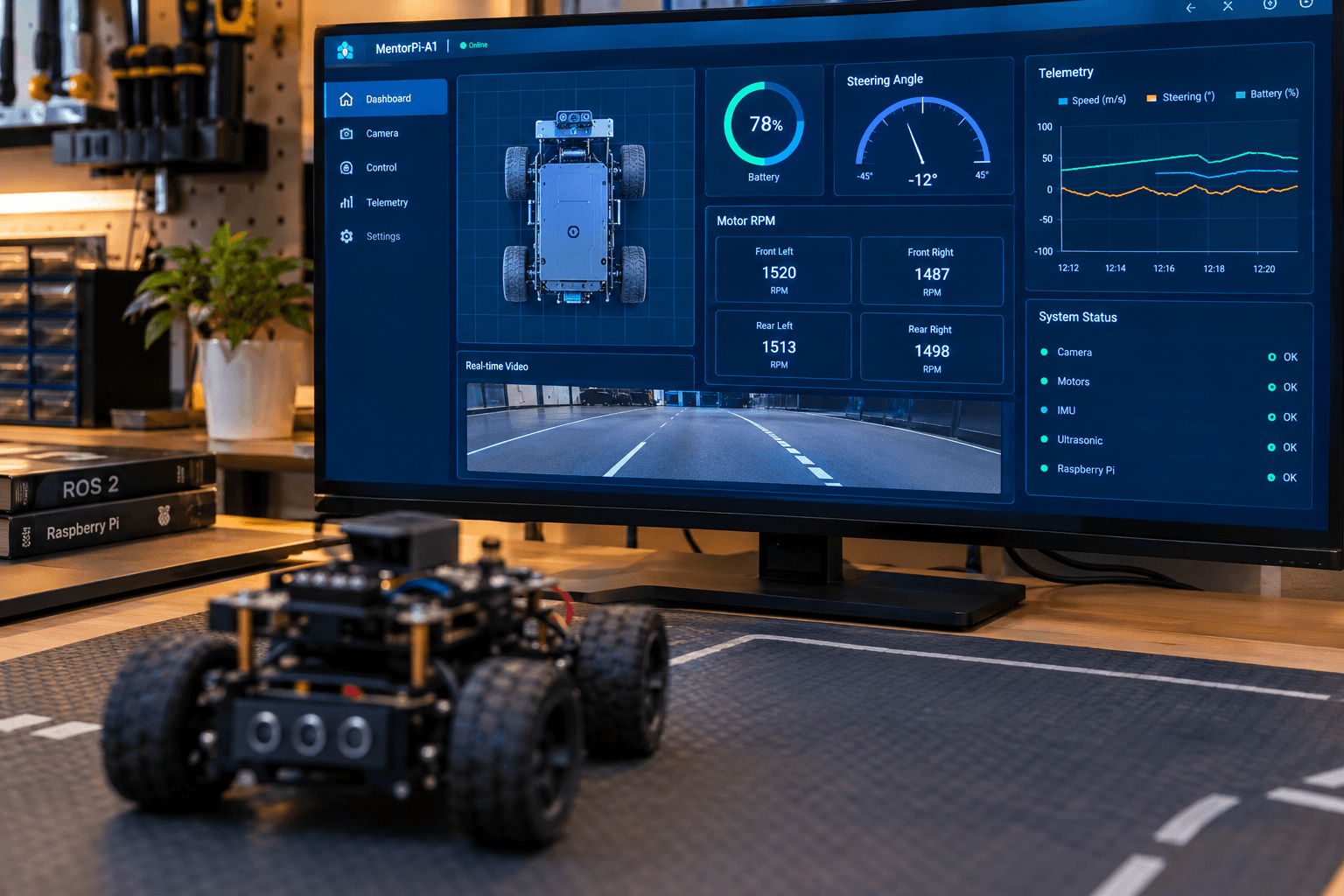
We didn't build the twin to look impressive in a demo. We built it because I was tired of guessing what the robot "felt" from the outside.
Here's the question I actually had, unfiltered, the week debugging MentorPi-A1 turned into a full-time hobby: the robot already logs everything — battery state of charge, motor current on each wheel, commanded versus actual steering angle, IMU heading. Isn't a scrolling log file, if I just read it carefully enough, basically the same information as a fancy dashboard? Why build a whole live visualization on top of data I already have?
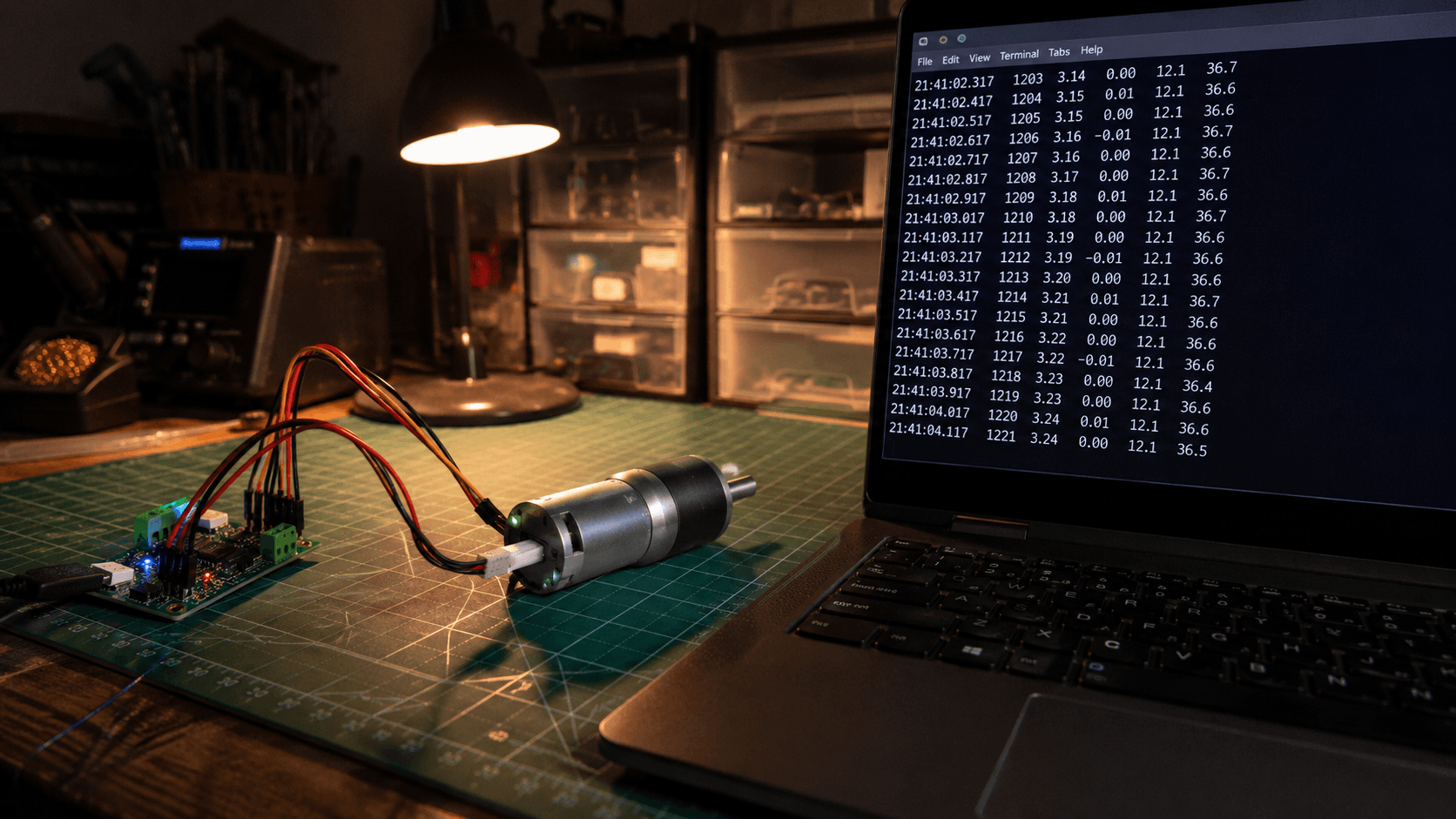
The way I actually worked through this wasn't by reading a digital-twin pitch — it was by looking honestly at what I'd already been doing for weeks: staring at a scrolling log, mentally reconstructing what the robot was doing. This motor current spiked, so it was probably climbing the ramp mat. This IMU value drifted, so it was probably turning. Fine for one signal at a time, on a robot doing one thing at a time.
It falls apart the moment two things are happening at once, or the moment the thing that's wrong is a relationship between two signals rather than either signal on its own — commanded angle versus actual angle, not just actual angle by itself. A human reading numbers in a terminal, no matter how careful, is doing the same work a plot does automatically, just slower and with more room to miss the pattern. That's exactly the problem I'd spent years on with a very different vehicle, standardizing telemetry into a signal schema a connectivity platform could consume live instead of after the fact — and I'd apparently forgotten the lesson the moment the vehicle got small enough to fit on a desk.
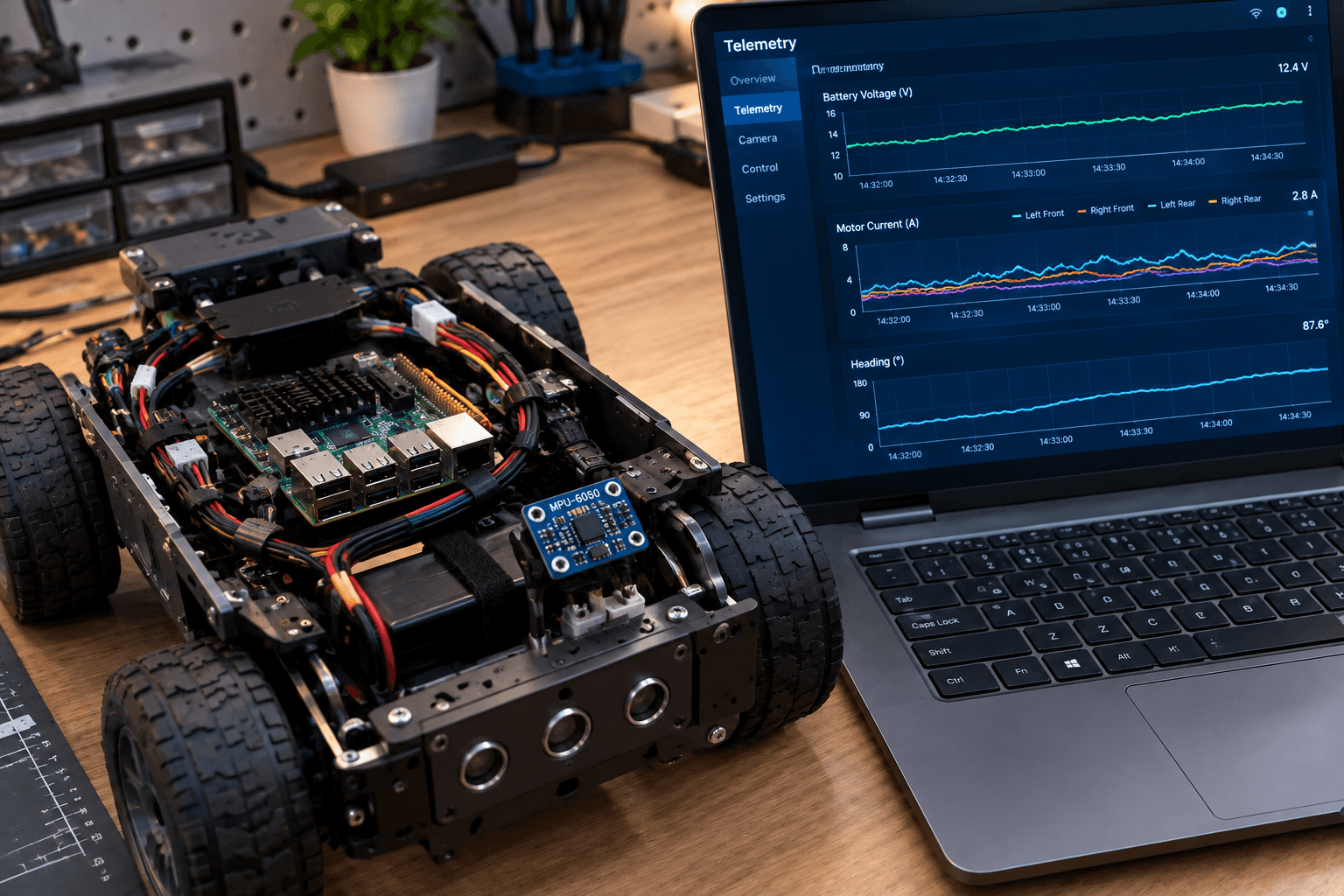
So we gave the robot a twin. Not a rendering exercise — a live, synchronized virtual copy that reads the same signals the firmware reads: battery state of charge, motor current on each wheel, commanded versus actual steering angle, IMU heading. Every signal gets normalized into the same schema regardless of which board or sensor it came from, the same principle behind vehicle signal standards in the automotive world, just scaled down to a robot you can pick up with one hand. The twin sits on a dashboard next to the physical robot on the bench, updating in real time as it drives.
The payoff showed up faster than I expected. A few days in, the twin's steering trace started showing something the physical robot's behavior hadn't made obvious yet: the visualized wheel angle was consistently lagging the commanded angle by a small, steady delay — not a spike, not noise, just a flat offset that scaled with how fast we sent commands. On the bench, watching the actual wheel, it looked fine. In the twin, with commanded and actual overlaid on the same plot, it was unmistakable. Traced it back to a queuing delay in the command path that only mattered at higher command rates — invisible during slow manual testing, and exactly the kind of thing that would have shown up as "mysterious steering lag" during an actual autonomous run.
That's the real argument for a digital twin, and it's not about the visuals. It's that a twin wired into the same signals as your safety and control logic gives you an early-warning system for the failures those systems are supposed to catch — except you see it as a trend on a graph instead of as a robot doing something wrong in front of the whole team.
It's still running. Anyone on the team can pull it up and see the robot's internal state without touching a single log file, and every new sensor we add gets a slot in the schema before it gets a line of firmware.
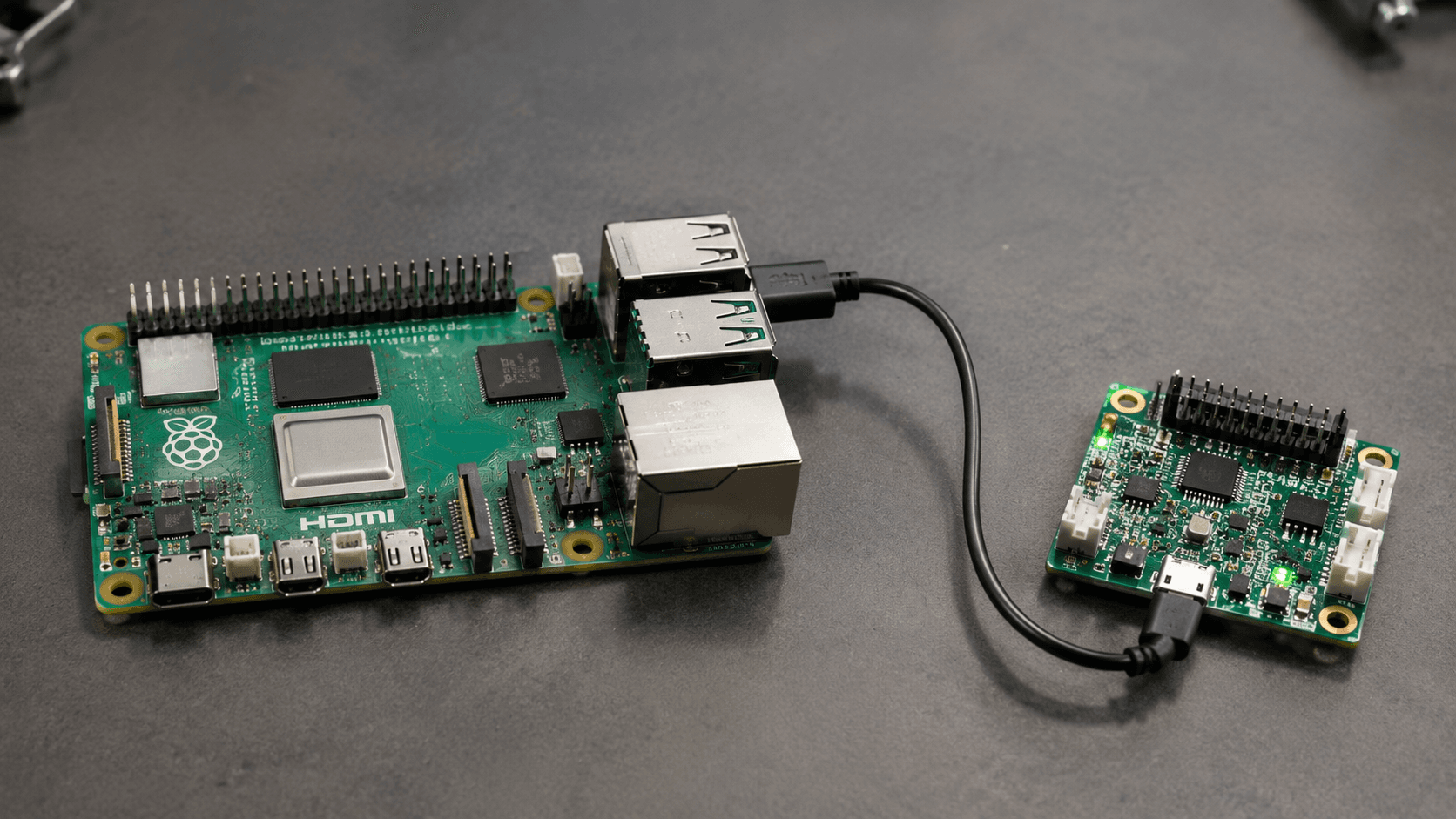
A genuine question I had before I understood the answer: the Pi already runs Linux and ROS2. Why bolt on a whole separate microcontroller too?
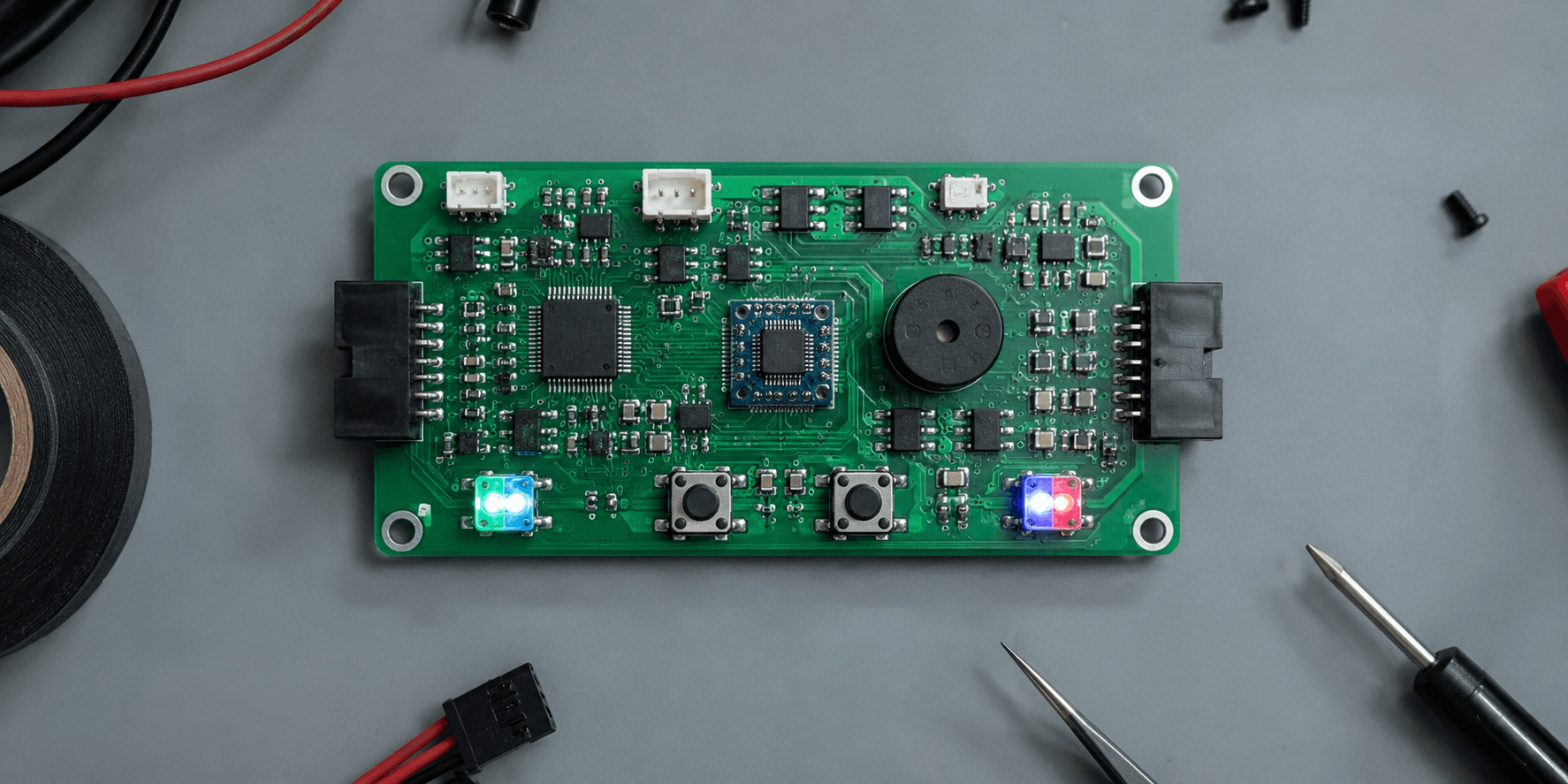
Five parts I walked right past on my way to the big square chip in the middle. They deserved better.
"set" said 1.000. "actual" never quite agreed with it. That disagreement is the whole lesson.