BlinkThorLabs
ISO 21434 for Engineers Who Just Want to Ship Code
A translation guide, not a summary of the standard. Here's what each term actually means for your Tuesday.
If you're a firmware or application engineer who just got told your project needs to comply with ISO/SAE 21434 and you don't have a security background, the standard's own language is not going to help you very much on your first read. This isn't a summary of the standard — there are plenty of those. This is a translation: the handful of terms you'll actually encounter in day-to-day project work, each rewritten as one plain sentence, with a concrete automotive example, and — the part that actually matters — what it means for what you do at your desk this week.
Damage Scenario
Plain-language translation: a description of something bad that could happen to a person, the vehicle, or the company, if a security weakness gets exploited — written from the "what goes wrong in the world" perspective, not the technical mechanism.
Automotive example: "An attacker remotely disables the braking system while the vehicle is in motion" is a damage scenario. It's describing an outcome, not yet describing how someone would achieve it.
What this means for your Tuesday: when someone asks you to help identify damage scenarios for a feature you're building, they're not asking you to describe a specific bug or vulnerability yet — they're asking "if this feature were compromised, what's the worst realistic outcome, described in terms a non-engineer would understand?" You're describing consequences, not mechanisms, at this stage.
TARA (Threat Analysis and Risk Assessment)
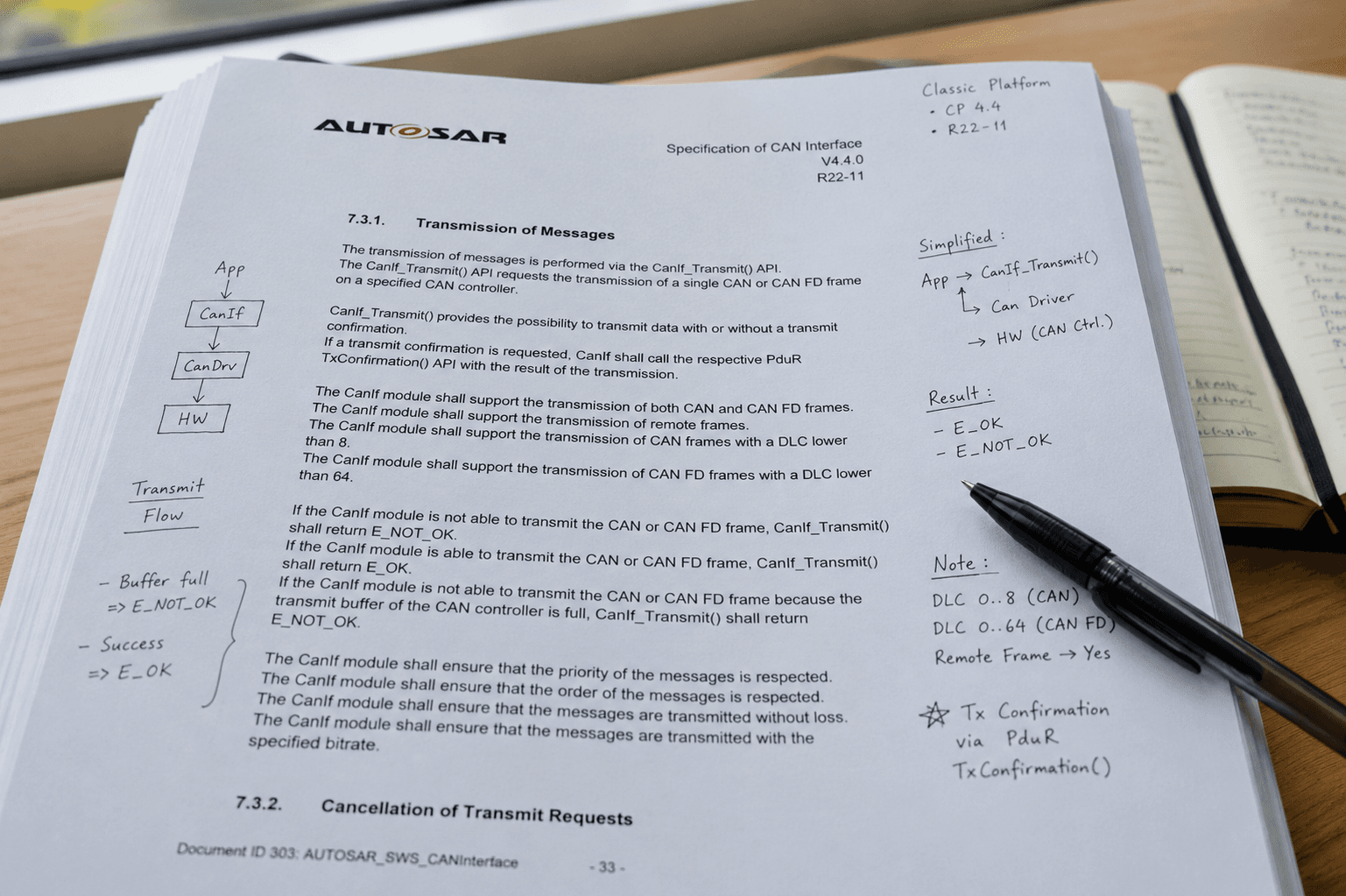
Plain-language translation: the structured process of listing out everything that could go wrong (damage scenarios), figuring out realistic ways an attacker could actually cause each one (threat scenarios), and then rating how bad and how likely each combination is, so you know which ones actually need active mitigation versus which are low enough risk to accept.
Automotive example: for a telematics unit with cellular connectivity, a TARA would walk through scenarios like "attacker gains remote code execution via a malformed message over the cellular interface," rate its impact (how bad if it succeeds) and its attack feasibility (how hard is it actually to pull off), and use that combination to decide whether it needs a dedicated countermeasure or is already sufficiently mitigated by existing design.
What this means for your Tuesday: if you're asked to participate in a TARA session for a component you're developing, your job is to bring real, specific knowledge of how that component actually works — its interfaces, its trust boundaries, what data crosses into it from where — so the security team (or whoever's facilitating) can accurately assess feasibility. A TARA done without input from the engineer who actually built the thing tends to either wildly overestimate or wildly underestimate real risk, because feasibility assessment depends on implementation details a security generalist won't have.
Cybersecurity Goal
Plain-language translation: a high-level statement of what must be true to prevent a specific damage scenario from happening — deliberately written at a level above any specific technical solution, similar in spirit to a functional safety goal in ISO 26262.
Automotive example: following from the braking damage scenario above, a cybersecurity goal might be stated as "unauthorized entities shall not be able to issue braking commands to the vehicle's braking ECU."
What this means for your Tuesday: when you see a cybersecurity goal referenced in a requirements document, don't expect it to tell you how to implement anything — that's intentional, the same way a safety goal doesn't specify a circuit design. Your actual implementation requirements will come from the next layer down (the cybersecurity concept), and the goal exists so everyone can trace "why does this specific requirement exist" back to a clear, non-technical statement of intent.
Cybersecurity Concept
Plain-language translation: the layer where a cybersecurity goal gets turned into an actual architectural approach — which components are responsible for which protections, and roughly how (authentication, encryption, access control, secure boot, whichever combination applies), without yet being down at the level of specific requirements for a specific ECU's specific software.
Automotive example: the cybersecurity concept supporting the braking goal above might specify "commands to the braking ECU must originate only from an authenticated gateway ECU over a secured internal channel, verified via message authentication codes" — architecturally concrete, but not yet a line-by-line implementation spec for a specific microcontroller.
What this means for your Tuesday: this is usually the document you'll actually be implementing against most directly, once it's been further broken down into component-level technical requirements. If you're implementing a feature and the cybersecurity concept it's supposed to satisfy seems vague or doesn't match what you're actually building, that's worth raising immediately — a gap here means either the concept needs updating or your implementation is drifting from what was actually intended, and either way it's much cheaper to resolve now than to discover during an audit.
Attack Feasibility
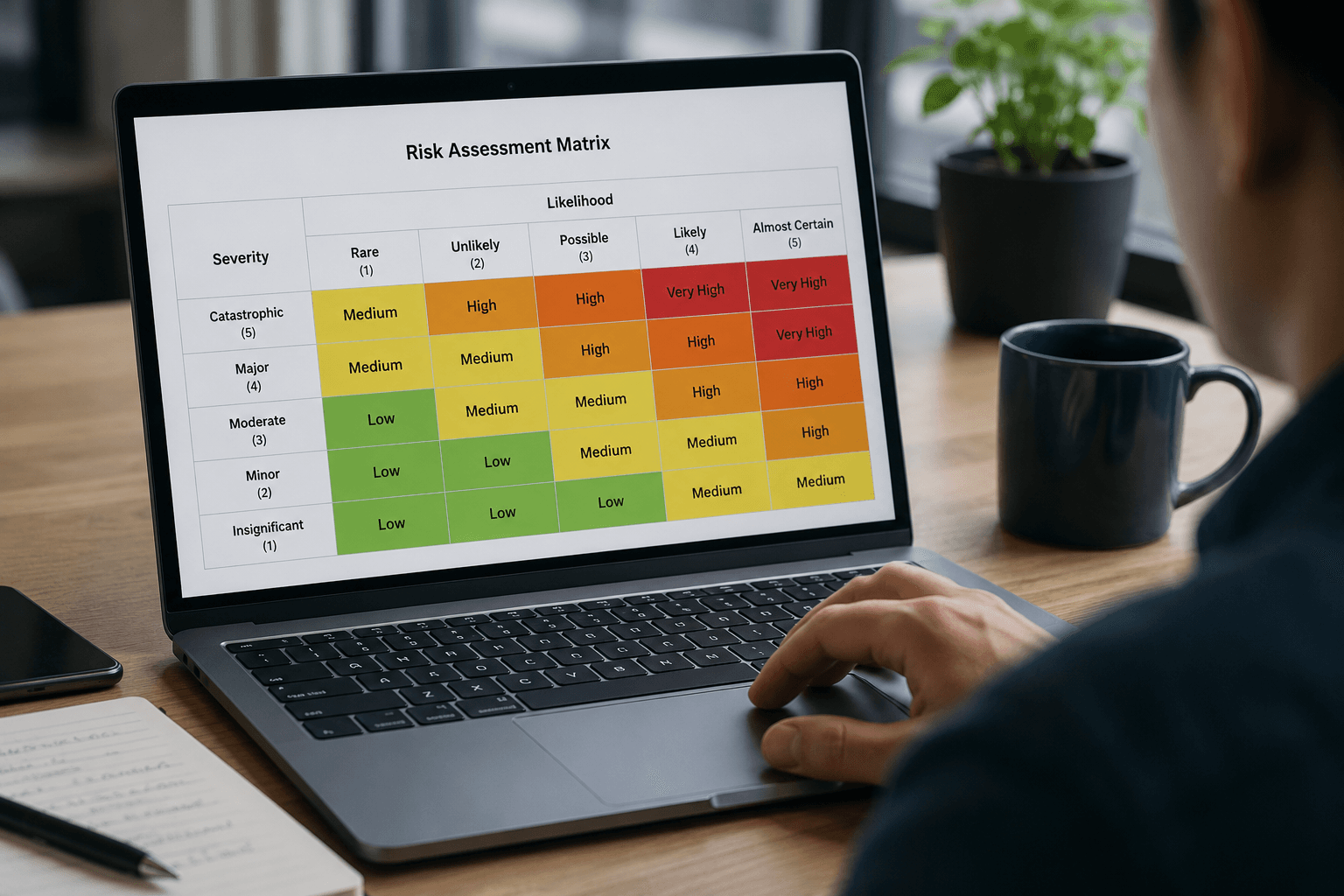
Plain-language translation: a structured estimate of how hard a specific attack actually is to pull off in practice — considering things like how much specialized knowledge, equipment, and time it would take, and whether the attacker would need physical access to the vehicle or could do it remotely.
Automotive example: an attack requiring physical disassembly of an ECU, specialized lab equipment, and deep reverse-engineering expertise rates as far less feasible than an attack exploitable via a message sent over a vehicle's existing cellular connection with no special equipment needed.
What this means for your Tuesday: if you're asked to help estimate feasibility for something you built, be honest and specific about the real barriers (or lack thereof) rather than defaulting to "well, in theory anyone could..." — feasibility ratings drive real prioritization decisions, and an inflated or deflated estimate in either direction leads to security effort being spent in the wrong place.
Cybersecurity Assurance Level (CAL)
Plain-language translation: similar in spirit to ASIL in functional safety — a rating that determines how rigorously a given component's cybersecurity claims need to be verified and documented, based on the risk associated with it.
Automotive example: a component directly implicated in a high-impact, reasonably feasible attack (like the braking gateway above) would typically warrant a higher assurance level, with correspondingly more rigorous verification evidence required, than a component with a comparatively low-impact or highly infeasible associated risk.
What this means for your Tuesday: the CAL assigned to your component determines how much documentation, testing evidence, and review rigor you'll actually need to produce — it's worth knowing your component's assigned CAL early in development, not discovering it late, because it directly shapes how much test and documentation effort to budget for.
The One-Paragraph Version, If You Only Remember One Thing
Damage scenarios describe what could go wrong in plain terms. TARA is the structured process of finding those scenarios and figuring out which ones are actually worth worrying about. Cybersecurity goals state what must be true to prevent them, at a high level. The cybersecurity concept turns that into an actual architectural approach. Attack feasibility and CAL both feed into how much rigor a given piece of the system actually needs. None of this replaces good engineering judgment — it's a shared vocabulary for making sure that judgment gets documented, traced, and reviewed consistently across a team, rather than living only in the head of whoever happened to think about it first.